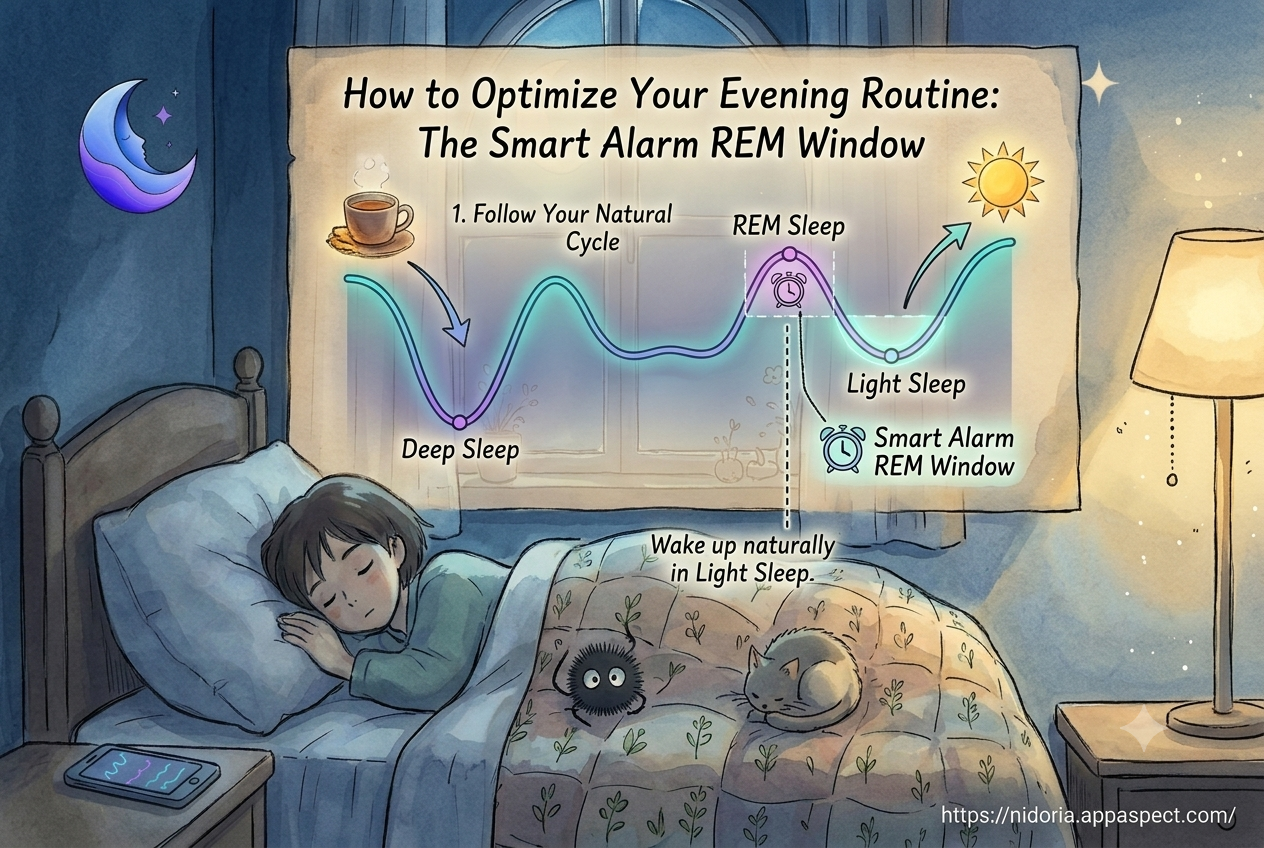
Snore Detection Guide: How to Decode Data and Stop Nighttime
Learn more about Snore Detection Guide. Learn how to decode snore detection data to reduce nighttime disruptions and improve sleep quality. Read to learn more.
Snore Detection Guide: How to Decode Data and Stop Nighttime
Introduction
Snore detection guide helps busy professionals turn raw nighttime noise into actionable sleep insights. By interpreting snore data you can pinpoint breathing disturbances, adjust smart alarm settings, and ultimately reduce nighttime snoring. This article walks through the metrics you’ll see in a modern wellness app, shows how each pattern ties to sleep quality, and gives concrete steps to improve rest without endless trial and error.
Understanding Snore Frequency and Duration for Better Sleep
Snore frequency and duration are the first signals of sleep disruption. Most apps record each snore event with a timestamp and length, allowing you to see how often you snore per hour and how long each episode lasts.
- Count per hour - A high count (for example, more than 20 snore events in a single hour) often correlates with lighter sleep stages.
- Burst length - Short bursts under five seconds are usually harmless, while prolonged bursts over 30 seconds may indicate partial airway blockage.
- Night-to-night consistency - Consistent high frequency suggests a chronic pattern, whereas occasional spikes can be linked to alcohol, congestion, or a new pillow.
[!NOTE] Frequency alone does not diagnose a medical condition; it is a flag for deeper analysis.
When you spot a pattern, start a simple log: note alcohol intake, nasal spray use, and sleep position. Over a week you’ll see which variables line up with spikes in snore count. This data-driven approach is more reliable than guessing.
How Snore Volume Patterns Reveal Underlying Breathing Issues
Snore volume tells you how forceful the airway obstruction is. Volume is measured in decibels (dB) and plotted alongside frequency. A rising volume trend often signals worsening obstruction, while fluctuating volume may reflect positional changes during the night.
- Low-volume snoring (below 45 dB) - Usually soft, nasal-congestion related, and less likely to cause arousals.
- Mid-range volume (45-55 dB) - Common in people with mild mouth breathing; may interrupt light sleep.
- High-volume snoring (above 55 dB) - Strong indicator of significant breathing disturbance; can trigger micro-awakenings that fragment REM sleep.
To interpret snore data, compare volume peaks with sleep stage metrics. If high-volume bursts align with transitions from deep sleep to light sleep, you are likely experiencing sleep stage disruption. Reducing volume often requires addressing the root cause-such as nasal strips, weight management, or positional therapy.
Linking Snoring Events to Sleep Stage Disruptions
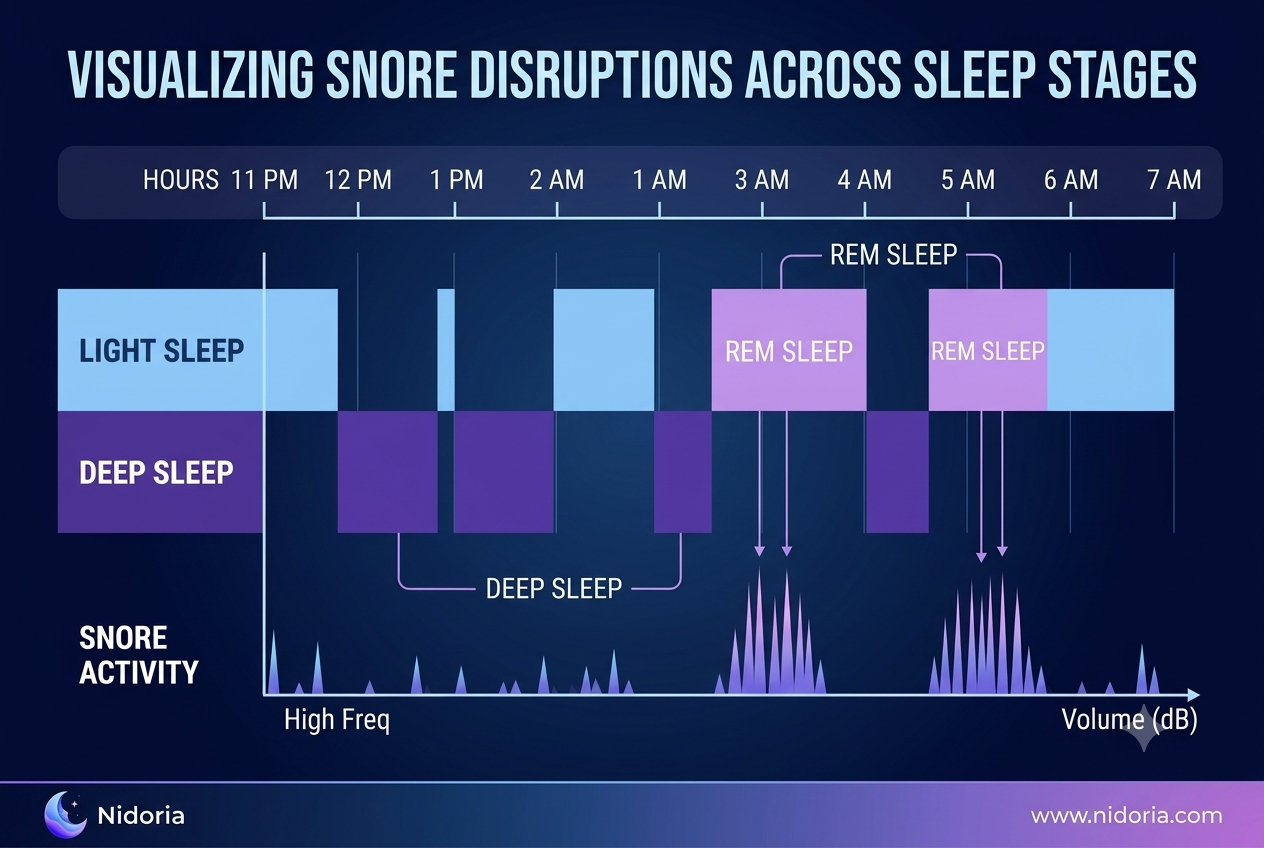
Snoring events are most disruptive when they coincide with REM or deep sleep. Modern wellness apps tag each snore with the current sleep stage, giving you a clear map of “problem windows.”
- REM vulnerability - REM muscle atonia makes the airway more collapsible; snoring during REM often leads to brief awakenings that you may not remember.
- Deep sleep (Stage 3) impact - Even short snore bursts can cause micro-arousals, reducing the restorative benefits of slow-wave sleep.
By overlaying snore timestamps on a sleep stage graph, you can identify whether most snoring occurs in light sleep (Stage 1-2) or the more critical REM/Deep phases. If the majority falls in REM, consider smart alarm snore integration that gently nudges you to a side position when a high-volume event is detected, preserving REM continuity.
Using Nighttime Snore Trends to Adjust Smart Alarm Settings
Smart alarm settings can be fine-tuned with snore trends to wake you at an optimal moment while minimizing disruption. A smart alarm that monitors snore volume and frequency can delay the alarm until a low-snore window appears, improving morning alertness.
- Set a “snore-quiet window” - Configure the alarm to ignore the first 30 minutes of heavy snoring, then look for a five-minute stretch of low-volume sleep.
- Enable position-based triggers - If your app detects you’re on your back and snoring loudly, the alarm can vibrate gently to encourage a side roll.
- Adjust wake-up intensity - Pair low-snore periods with a softer sound, reserving the full volume for when you’re already in a light stage.
These adjustments turn the alarm from a blunt wake-up tool into a sleep disruption solution that respects your natural cycles. Nidoria’s smart alarm feature already integrates snore detection, making it easy to apply these settings without manual configuration.
FAQs
What does a high snore frequency indicate?
A high snore frequency usually points to repeated partial airway obstruction, which can fragment light and deep sleep. Consistently high counts suggest you should evaluate lifestyle factors (e.g., alcohol, weight) and consider positional therapy.
How can snore volume affect sleep stages?
Higher snore volume often coincides with micro-arousals, especially during REM and deep sleep. This reduces the time spent in restorative stages, leading to poorer overall sleep quality.
Can snoring data improve smart alarm accuracy?
Yes. By feeding real-time snore volume and frequency into the alarm algorithm, the device can select a wake-up moment when snoring is minimal, lowering sleep inertia and improving morning productivity.
What lifestyle changes reduce nightly snoring?
- Maintain a healthy weight.
- Avoid alcohol within two hours of bedtime.
- Use nasal strips if congestion is frequent.
- Practice side-sleeping with a body pillow.
These adjustments directly lower both snore frequency and volume, as reflected in your tracking data.
How does body position influence snore patterns?
Sleeping on the back allows the tongue and soft palate to fall back, increasing airway resistance and snore volume. Side sleeping keeps the airway more open, often reducing both frequency and intensity of snoring events.
Key Takeaways
- Track snore frequency and duration to identify chronic patterns.
- Use snore volume analysis to gauge the severity of breathing disturbances.
- Map snore events to sleep stages to spot REM or deep-sleep disruptions.
- Adjust smart alarm settings based on nightly snore trends for smoother wake-ups.
- Implement simple lifestyle tweaks-weight control, alcohol moderation, and side sleeping-to lower snore metrics.
Conclusion
Decoding snore data transforms a noisy night into a roadmap for better sleep. By understanding frequency, volume, and stage linkage, you can make precise adjustments-whether through smart alarm integration or lifestyle changes-that directly reduce nighttime snoring and boost overall wellness.
Call to Action with Snore Detection Guide
Ready to turn your snore data into actionable sleep improvements? Start using Nidoria to monitor snore patterns, integrate smart alarm cues, and track the impact of your nightly habits. Explore the app now and experience quieter, more restorative sleep.
Further Reading
- Sleep apnea - Overview of breathing disorders affecting sleep.
- National Sleep Foundation: Sleep Hygiene - Evidence-based tips for better sleep habits.
- American Academy of Sleep Medicine: Position Therapy - Clinical guidance on positional strategies for snoring.
- Harvard Health Publishing: The Science of Snoring - Explanation of physiological causes behind snoring.